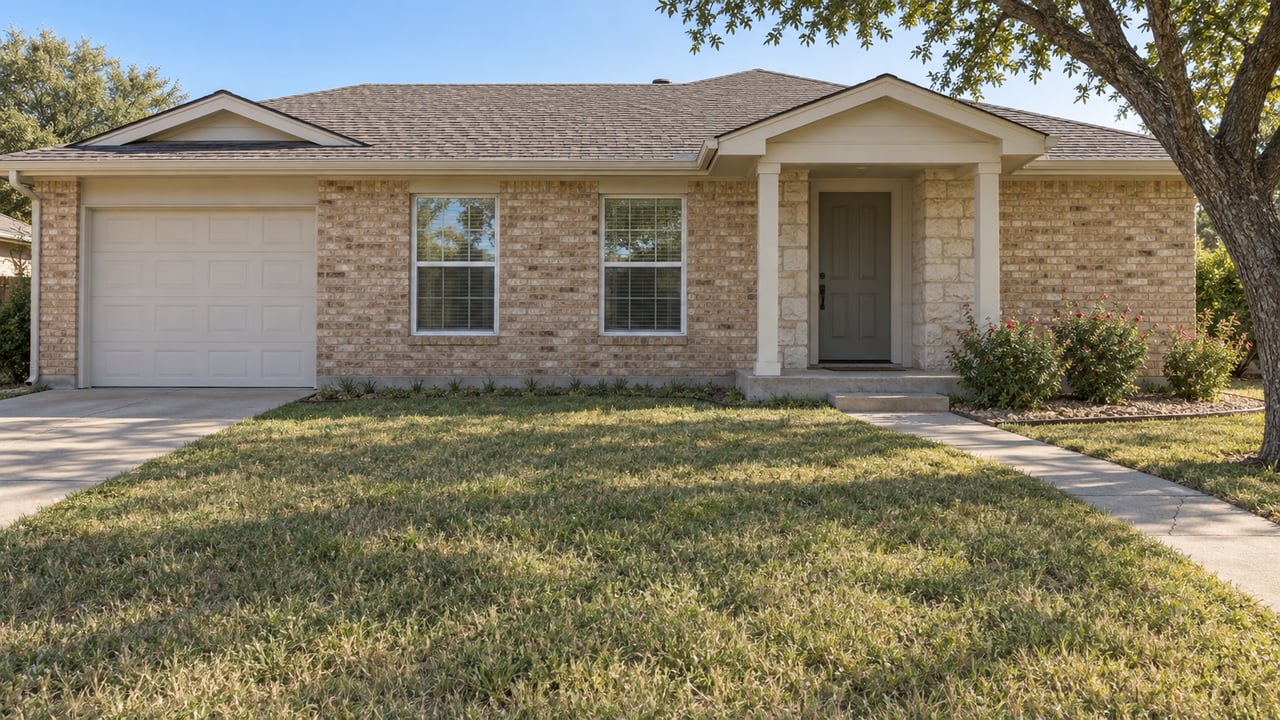
Abilene Housing Market: Data Centers and First-Time Buyers
October 15, 2026
"We put an offer in the same day, and then somebody else had already gotten the house." That was a first-time buyer in Abilene talking to KTXS in June 2026. The buyer and a partner had started looking because their rent kept climbing, and then their landlord told them the next renewal would be much higher.
That order of events explains most of what first-time buyers in Abilene are dealing with this fall. A construction workforce came to town to build the AI data center campus north of the city. Temporary workers rent, so the pressure landed on rentals first. Higher rents then pushed households into the starter-home market, and those households are now competing with companies buying the same homes. The construction schedule driving all of this got longer this year, and the new rental supply that could ease it is mostly scheduled for late 2027 and beyond.
The rental numbers moved first and moved hard. On August 19, 2026, CoStar reported Abilene's apartment vacancy at 2.5%. It also said the city had the second-fastest apartment rent growth in the country since the Stargate announcement.
Rentals also left the long-term market. In June, Abilene Christian University said more than 100 incoming students had no place to live for fall. The university said properties usually leased to students were being bought, repurposed or converted to short-term housing. It planned to reopen a former residence hall that had been slated for demolition. One renter told KUT in August that a previous landlord had declined to renew his lease so the home could become a $7,000-a-month short-term rental. That's one household's story, not a citywide rate. Still, it shows how a single-family rental can leave the long-term pool.
When rents rise this fast, buying a home starts to look different to renters. The buyers KTXS interviewed called the proposed renewal increase more than they wanted to spend. So they started house hunting.
Renters who start looking at homes join a market that already had other buyers in it. Maegan Brest, president of the Abilene Association of REALTORS, told KTXS that companies were buying homes for $10,000 to $15,000 more than the average buyer can pay. She said the market felt similar to the height of the pandemic boom, with multiple offers and cash buyers. Ken Hogan, the association's executive, described the same multiple-offer conditions a few days later.
Here's how that gap can open up. A household figures its price from what it can borrow and comfortably pay each month. An owner who plans to rent the home out figures its price from what the home can earn. In a city with 2.5% apartment vacancy and fast rent growth, those two numbers drift apart. That is one way an operator can pay more for the same three-bedroom house.
Holding costs are going up for everyone, too. Brest said property taxes and insurance have risen, and her own insurance went up by an additional $300.
The Texas Real Estate Research Center at Texas A&M publishes monthly MLS figures for the Abilene metro area. Here are five months from that series:
| Month | Closed sales | Median price | Active listings, month-end | Months of inventory |
|---|---|---|---|---|
| August 2025 | 253 | $264,000 | 732 | 3.61 |
| April 2026 | 226 | $255,250 | 390 | 1.64 |
| June 2026 | 311 | $274,990 | 423 | 1.74 |
| July 2026 | 247 | $308,900 | 512 | 2.11 |
| August 2026 | 212 | $304,900 | 539 | 2.26 |
Between August 2025 and August 2026, the metro median rose by $40,900, or about 15.5%. Active listings fell by nearly 200, and months of inventory dropped from 3.61 to 2.26. Those numbers fit the rental-pressure story.
The spring and summer months show something more recent. Inventory hit its low in April 2026, with 390 active listings and 1.64 months of supply. Since then it has climbed back every month, reaching 539 listings in August. At the same time, August 2026 closed sales came in at 212, down 16.21% from August 2025. So there are more homes on the market than in spring, and fewer are closing, at medians above $300,000. That's a meaningfully different market from the one buyers faced in April. One late-summer stretch isn't enough to call a trend, though.
Keep a few limits in mind when reading these figures:
If the construction workforce were packing up this winter, the reasoning here would be simple. The schedule has stretched instead, and new housing comes later than the crews do. In rough order:
Put those dates side by side. Construction demand now runs at least to mid-2027, and the first named apartment relief arrives around the same time. The rental pressure that sent renters into the buying market hasn't been scheduled to ease before then.
For a first-time buyer, a few practical points follow from all this.
Is the data center the only thing driving Abilene's market? No. Local REALTORS also point to expected growth at Dyess Air Force Base as the B-21 arrives. People quoted by KUT noted that the city already had three universities and an Air Force base putting demand on housing before construction started.
Does the end of the first construction phase mean rents will drop? Nobody has published a forecast. The adjacent Microsoft campus has its own construction timeline into mid-2027, and new apartments like Wayfare's aren't expected before late 2027.
Why do association figures and TRERC figures differ? They measure different areas and time periods. TRERC reports monthly metro-wide MLS data. The association numbers quoted on KTXS were a year-to-date median and a point-in-time listing count. Both are useful, as long as you don't mix them in one comparison.
If a rent renewal notice has you looking at homes for the first time, Tiara Shields can sit down with you and compare your lease quote with a realistic monthly payment on homes for sale in Abilene right now. She'll also explain how offers are playing out this fall. Let's Connect.
Stay up to date on the latest real estate trends.

Get assistance in determining current property value, crafting a competitive offer, writing and negotiating a contract, and much more. Contact me today.